
A lot of people are posting on LinkedIn consistently now.
But very few are actually generating business from it.
I see people getting:
Likes
Impressions
Comments
Reposts
…but still struggling to get:
Inbound leads
Quality conversations
Qualified calls
Real buyers
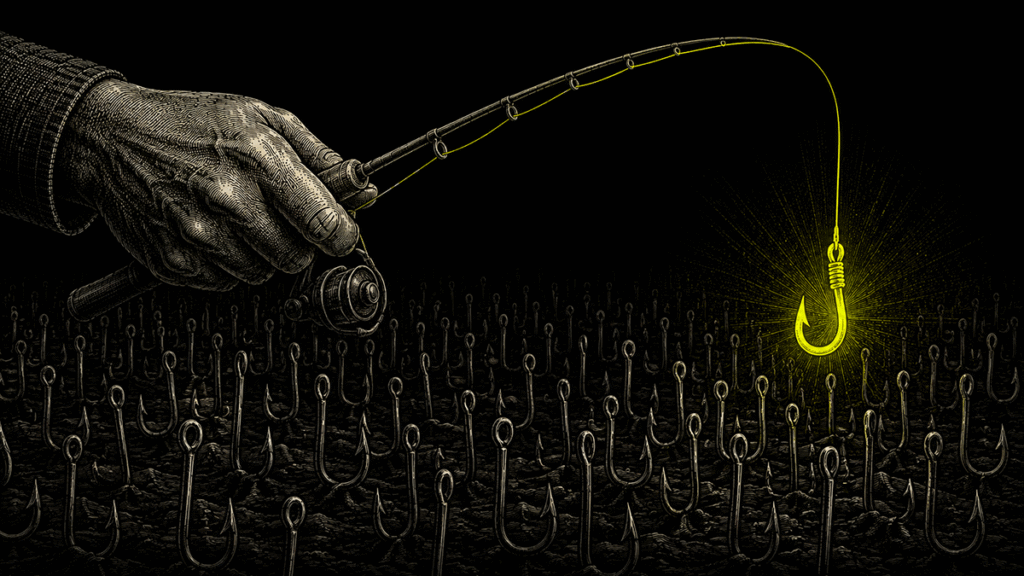
That usually happens because the content looks good on the surface, but there’s no real positioning behind it.
LinkedIn is not just about “posting content.”
It’s about building trust around one clear problem.
That’s it.
The moment people clearly understand:
What you do
Who you help
What problem do you solve
How do you think
…your content starts converting differently.
Not overnight.
But consistently.
The biggest mistake most people make
Most people try to sound smart.
Instead of sounding clear.
So their content becomes:
Over-written
Motivational
Generic
Broad
AI-looking
Hard to relate to
Simple content usually works better.
Especially when it feels real.
The best-performing posts are usually the ones where people feel:
“Okay… this person actually understands the problem.”
That connection matters more than perfect writing.
Hooks matter more than most people think
If the first 2 lines don’t stop people, the rest of the post doesn’t matter.
Simple.
Your hook should create:
Curiosity
Tension
Relatability
Contrast
Emotion
or a strong observation
Bad hook:
5 tips for LinkedIn growth.
Better hook:
Most people don’t fail on LinkedIn because of bad content.
They fail because nobody understands what they actually do.
Learn Full System Here – https://vikashj.co/
See the difference?
One sounds informational.
The other sounds real & capturing leads.
The structure I usually follow
I don’t overcomplicate it. I’m following the system behind it. Read here: https://vikashj.co/category/newsletter/
Most of my posts follow this flow:
Strong observation or problem
Explain why it happens
Share a practical shift/framework
Give examples or a breakdown
End with a soft CTA
That’s it.
You don’t need fancy writing.
You need clarity.
The goal of LinkedIn content is not just engagement.
It’s trust.
Good content should help people understand:
What you solve
How you think
Why is your approach different
Soft CTA
I’m writing more playbooks around positioning, acquisition, funnels, and scalable growth systems.
You can follow along here: https://vikashj.co/articles/
Simple.
No hard selling.
No “DM me now.”
Just value first.
One thing that changed everything for me
Earlier, I used to post randomly.
Different topics. Different audiences. Different styles.
The result?
No clear perception.
Now I stay around the same themes:
- growth systems
- positioning
- acquisition
- funnels
- content
- business scaling
- inbound growth
That repetition builds authority over time.
People start remembering you for something.
That’s important.
Lead magnets work best when they feel useful
Most people try to force downloads.
That usually doesn’t work.
A better way is:
Teach something useful first.
Then offer deeper help naturally.
Example:
Post:
“How to improve your hooks.”
Lead magnet:
“50 hook templates I personally use.”
Now the lead magnet feels like a continuation.
Not a sales trick.
Images matter too
Good visuals increase:
- Stopping power
- Readability
- Shares
- Saves
- Brand recall
But the mistake is over-designing.
Simple works better.
Some formats that usually work:
- Clean text graphics
- Framework visuals
- Playbook covers
- Carousels
- Minimal charts
- Before/after breakdowns
The goal is clarity.
Not decoration.
Final thought
A lot of people are chasing virality.
I think LinkedIn works better when you focus on:
→ Clarity
→ Trust
→ Consistency
→ Positioning
→ Useful insights
Because one right client is more valuable than random reach.
That’s how I personally see LinkedIn now.
Not as social media.
But as a long-term inbound growth system.
I’ll keep writing practical playbooks like this around:
→ Positioning
→ Acquisition
→ Funnels
→ Content
→ Conversion
→ Scalable systems
And if you ever get stuck somewhere while building your business, feel free to ask questions through the form inside the playbook.
I read them personally and try to answer as many as possible based on the business stage, gaps, and growth direction.